
SEPTEMBER 2025, FLASH, 980 WORDS
Prefer to read this as an EPUB or PDF?
Subscribe to Fantasy to support short fiction, and get every story as it drops:
Knife had not always been Knife. Once it had been Tree. Once it had been Rock. Processes were applied to Tree and Rock. Cutting, carving, sanding. Crushing, heating, hammering. Filing. Polishing. Honing. One would not look at Knife and say, oh, I see Tree, I see Rock, I see the fire and the tools and the humans that made it.
Knife does not exist on its own. It is always Knife plus. Knife in forge. Knife on bench. Knife in hand. Knife in flesh. If Knife had a voice, it might say, “my purpose is to cut meat.” That was what its maker had in mind when he created it, and that is what its possessors use it for.
Sometimes Knife is dull. Sometimes it is bloody. These conditions are impermanent; dullness is followed by rapid, rhythmic strokes of blade across whetstone, and Knife becomes sharp. Bloodiness is followed by the caress of warm water and soft cloth, and Knife becomes clean. If Knife had will, it might strive to be dull and bloody, if only to experience the pleasure of being made otherwise. Miniscule vibrations, from the air, from the humans that wield it, from the flesh it cleaves, shiver through Knife. They are not enough to awaken it, but the potential of life, while unfathomably distant, still exists. Ironically, the times when the potential is closest is on those occasions when it is used to end another life. Blade slits throat. Bleating and movement and beating of heart ceases. What was once Sheep becomes Meat and Offal and Hide. Energy transfers, but only an infinitesimal amount goes to Knife. A little goes to the earth, some to the carnivores that share human hearths, and the rest to Knife’s owners.
And so it might continue, until Knife is lost or abandoned, wood rots and metal corrodes, and the earth reclaims it.
Might. But does not.
Knife is in sheath. Sheath is in kitchen. Also in the kitchen are Woman and Man. They set the air, and with it Knife, quivering with their cries of rage and fear. So much energy is contained in human emotions. Their bodies generate more, and more, and it overflows until it seems the enclosed space they occupy could burst open with the force.
Knife is in Man’s hand. Knife presses against Cloth, which once was Plant. Hand forces Knife through Cloth and into Woman. Iron in the blade meets iron in the blood.
With this action, Woman will soon become something else. Meat, to be consumed by Worm, to be excreted into food for Tree, to become so many other things, on and on until the end of time. Soon, but not yet. Woman has enough seconds of consciousness left to place her hands over Man’s, hold tight, look into his eyes, and speak.
The words are a curse. They are secret women’s business whispered ear to ear throughout generations, only to be spoken aloud in the direst situations. They are akin to being set upon by a swarm of bees – neither speaker nor witness will survive the utterance.
With that single thrust and those few spoken words, Knife becomes a conduit between the two people along which a potent charge of malevolence flows in both directions. For a moment, the three entities become one. There is no thought, no sentience, only seething, irresistible intent. The curse has its effect on Knife too, in ways neither human could anticipate.
Knife is withdrawn from Woman, and Woman falls. Knife falls too, clattering onto the floor. One becomes three again.
The intent in Knife remains.
Man sits next to Knife, wraps his arms around his knees, and rocks back and forth. “What have I done? What have I done?” he says, over and over again. Knife calls to him, but in his miserable state, he cannot hear. Knife, having no concept of time or comprehension of Man’s mental state, continues to call. Not words, just pure urge, nudging at the edges of his subconscious and bit by bit, pushing out his self-pity. His mantra quietens, his body stills, and when he arises, the story he tells himself is sullen with grievance. She wronged me, and she deserved to die, and there are others who have wronged me, and others who have not yet but will unless I strike first.
Man picks up Knife and cleans it, then tucks it into its sheath and stows the sheath at his belt. He believes he takes these steps of his own volition, but it is really Knife steering his mind into keeping the blade close. Knife rides snug on his hip and radiates desire as he hefts Woman’s body onto his shoulder, carries it into the woods and buries it carelessly, shallow enough for scavengers to find it, impatient to carry out Knife’s commands even as he imagines the thoughts to be his own.
Knife has no brain with which to think, nor a heart with which to feel, yet still it experiences something akin to human joy at what happens next. Every throat cut, every belly opened, every artery severed recreates that miraculous instant of unity and charges it with more monstrous energy. Knife has neither throat nor belly, yet still it thirsts.
Nothing lasts forever; when at last Man’s murderous frenzy is ended by other men who stop him, imprison him and confiscate his weapon to be used as evidence in a court of law, Knife is indifferent. Other humans will come close enough to hear it. Already, it can sense them edging closer and closer without even knowing it, its behest drawing them in inexorably like flotsam on the edge of a whirlpool.
Knife does not exist on its own. But now, the notion that it could bring about the end of everything and become Only Knife seems worthy of pursuit.
Until then, Knife is Knife Plus.

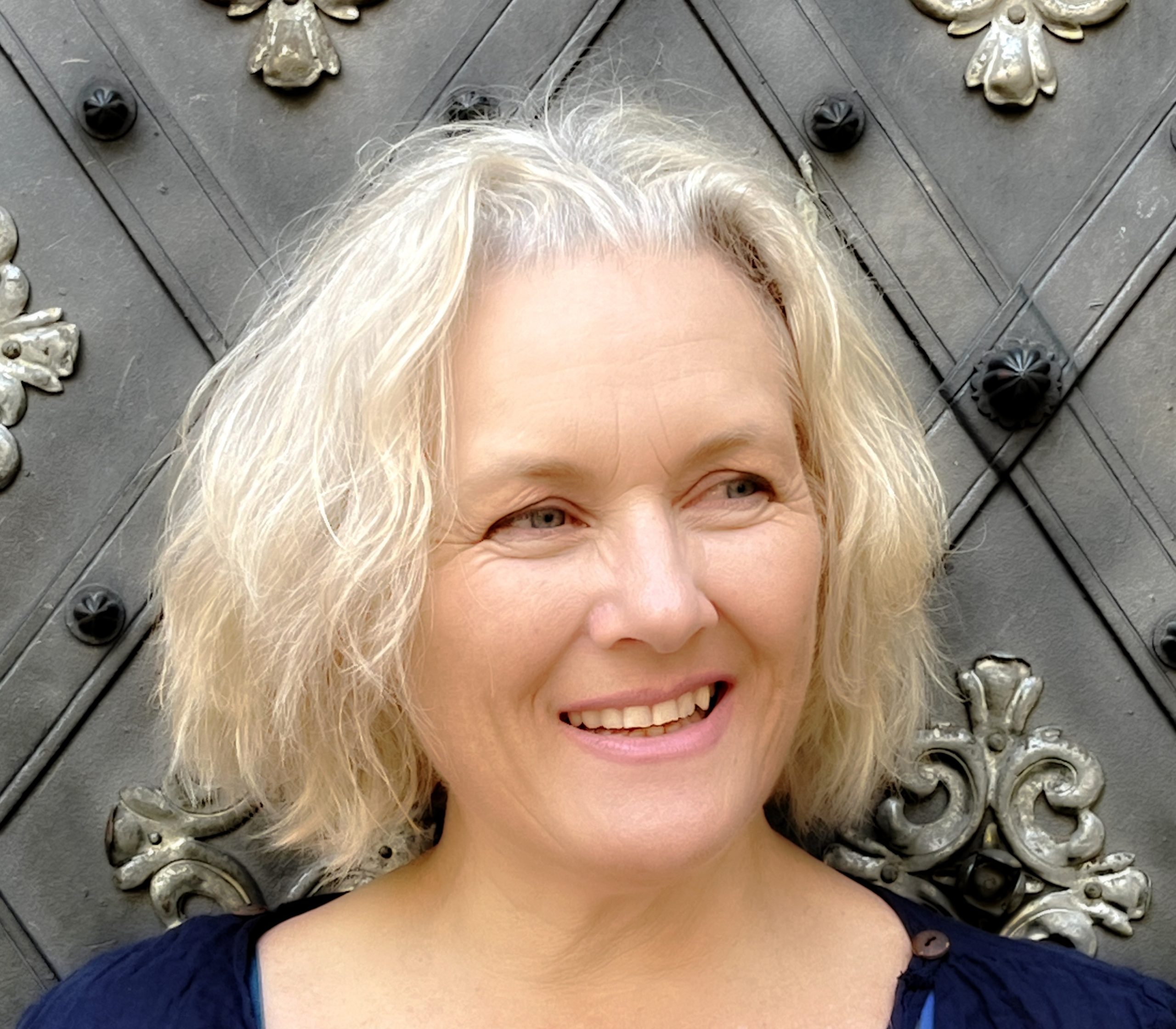
Tracie McBride is a New Zealander of Ngāpuhi descent who lives in Melbourne, Australia. Her work has appeared in over 100 print and electronic publications. She has two short story collections in print, Ghosts Can Bleed and Drive, She Said, and her work has won or been shortlisted for various awards including the Sir Julius Vogel Award, the Aurealis Award, and the Shadows Award.
Return to Issue #98 | Subscribe to Fantasy
Behind the Scenes with Tracie McBride
-What was the initial inspiration for this story, and were there significant changes from that inspiration through edits and revisions?
-How does this story fit into your body of work – is it similar in ways to what you usually write or is it very different?
T.M. The inspiration for this story came from a recorded talk I was listening to from James Low, who is a psychotherapist and Buddhist teacher. In the talk he uses the phrase “Knife Plus.” It struck me as an unusual way to describe a concrete thing. My story started there and diverged considerably from James Low’s message! In that sense, this story is similar to my body of work; I like to take a seed (a phrase, an image, an overheard conversation), fling it far into an out-of-context field, and see what grows. Where it differs from my previous work is that it is told from the perspective of an inanimate object.