

SPRING 2026, SHORT STORY, 1500 WORDS
Prefer to read this as an EPUB or PDF?
Join our Patreon and instantly download issue 42:
The first thing Zuo noticed was the smell.
It was not the smell of rain, wet leaves, or red earth. It was sharp and chemical, like vinegar burned too long over fire, mixed with the sweet, choking rot of old ammonia sacks left open in the sun.
That smell only came from one place.
Row Four.
The rubber plantation stretched for miles, the Hevea trees planted in straight, obedient lines that obeyed no man but the Company. Each trunk bore the familiar spiral cuts—thin wounds reopened every dawn so latex could drip into waiting cups. Zuo had known these rows since childhood. He had learned to walk between them before he learned to read. This was how men fed their families. This was how boys became men before their voices settled.
But Row Four was not like the others.
Here, the scars were not only on trees.
Zuo knelt in the red mud, his knees sinking into soil still damp from last night’s rain. In front of him stood his father.
Six months earlier, White Root Rot had climbed Papay’s legs, turning muscle to rubber and blood to something pale and thick. The Company said it was a rare industrial reaction. The old women said the earth was reclaiming what had been taken for too long.
Now Papay stood upright, bolted to a wooden support beam so he would not fall face-first into the mud. His body had hardened into a dull grey-white sheen. His mouth was frozen open, caught between breath and speech. His eyes were wide and clouded, fixed on nothing Zuo could see.
The Company called him Eternal Grade.
Zuo still called him Papay.
Behind him, boots crunched along the laterite path.
The Overseer walked with the confidence of a man who never carried his own bucket. His khaki shirt was clean despite the mud, his cane polished smooth by years of tapping it against trees—and people.
“Zuo,” the Overseer said. “Your papay bucket lookin’ thin today.”
Zuo did not turn.
“He cold, Bossman,” Zuo said. “Rain coming. Rubber don’t flow good when sun hide.”
The Overseer scoffed. “The ships in Monrovia don’t wait for sun.” He tapped his cane against a nearby trunk. “America don’t buy excuses. They buy white.”
Zuo tightened his grip on the tapping knife.
“That latex your papay bleeding,” the Overseer continued, “that one make airplane tire. War truck tire. Big-big money. You want your small brother eat rice tonight?”
Zuo said nothing.
“Then you cut deeper.”
Zuo looked up at his father’s eyes. They were fixed westward, toward the dirt roads that led to the coast, toward the ocean Papay had spoken of but never seen.
Something itched beneath Zuo’s thumbnail.
He pressed the nail into the wooden handle of the knife, but the sensation only deepened—an internal pressure, like something stretching beneath his skin, searching.

The sickness began during the Year of the Great Mist.
That year, the mornings arrived thick and white. Fog swallowed the plantation rows until the trees stood like pale figures waiting to be counted. Work continued anyway. Work always continued.
Papay came home one evening and sat on the porch with his feet in a basin of warm salt water. He did not remove his shirt. Sweat soaked the cloth, though the air was cool.
“The soil biting me,” he said.
Zuo knelt and looked. On Papay’s heel was a small chalky patch of skin—smooth, hard, pale. Not a blister. Not a callous.
“It small thing,” Zuo said.
Papay shook his head. “Small thing how big trouble start.”
Papay did not stop working. No one did.
Men on the plantation worked with fever, with cracked ribs, with malaria shaking their bones so badly they tied cloth around their wrists just to keep the tapping knife steady. Stopping was not a decision; it was something that happened to you, like death.
Each morning before dawn, Papay rose from the mat and strapped the bucket to his waist. His movements became slower, deliberate. Zuo noticed how long it took him to straighten his legs, how he paused at the doorway as if waiting for his body to catch up with his intention.
In the rows, the other men watched but said nothing.
Silence was safer than sympathy.
By the second month, the hardness had climbed past Papay’s ankles. His toes stopped bending properly. He began walking around the small embankment near Row Four, even though it added distance.
“Ground tricky,” he said when Zuo asked.
At night, Zuo heard him rubbing his legs with palm oil, pressing hard, as though trying to knead himself back into flesh. The skin made a dull sound under his hands, not the soft sound of living muscle.
Grandma Nyemah refused to touch him.
“We tap too long,” she whispered from her mat. “Now the earth tapping us.”
The Company doctor came once, then again, always with a notebook, always with men from the factory. They pressed metal instruments into Papay’s leg. They bent needles. They smiled.
“This one strong,” one of them said. “Better when full.”
Papay kept working.
When his fingers stiffened, Zuo tied the bucket for him. When his grip failed, Zuo cut bark for him under supervision. The Overseer recorded the yield under Papay’s name anyway.
By the time Papay’s voice went hoarse, his skin had changed color completely. Dark flesh faded to almond, then to a pale ash. The whites of his eyes looked wrong against it, too sharp, like chalk drawn on charcoal.
One evening, Papay did not come home.
Zuo found him in Row Four after dark, standing upright against a tree, unable to sit, unable to fall. Latex dripped steadily into the cup at his feet.
His mouth was open, but no sound came out.
The Company men arrived before dawn.
They bolted him in place.
They told Zuo it was temporary.
It was not.
From that morning on, Papay belonged to Row Four.
The Company did not bury men who hardened.
They repurposed them.
Bolted them upright. Fitted them with reinforced cups. Cut them deeper.
“Indestructible,” the factory men said. “No fatigue. No complaint.”
Zuo was reassigned immediately.
“Family know family,” the Overseer said. “You understand how he behave.”
Understanding was not required. Obedience was.
Each cut Zuo made into his father’s hardened body felt wrong in a way he could not explain. The knife met resistance, then gave way with a faint vibration, as though the flesh remembered being a tree.
Latex flowed thick and white.
The bucket filled faster than it ever had when Papay was alive.
Women passing on their way to the creek averted their eyes. Children stopped playing near Row Four. At night, Zuo heard whispers that the trees were changing, that the ground had grown hungry.
Zuo did not argue.
He scratched.
The itching spread. It began under his nails, then crept up his wrists. Some nights he woke with the sensation that something inside him was pulling downward, stretching toward the earth.
So he went to the Night Market.
Old Ma Musu sat on a crate near sacks of kola nut and dried pepper. Her eyes were clouded white from a sickness that had taken her legs years earlier.
“You scratching,” she said before Zuo spoke.
“I want know,” Zuo said. “What thing this be.”
She pressed her palm into the dirt.
“Rot not sickness,” she said. “It bridge.”
Zuo stood still.
At first, he heard only insects.
Then something deeper—a vibration rising through his feet, steady and patient.
“They talking,” Ma Musu said. “Through roots. Through latex. Every man they turn is another line underground.”
“Talking to who?”
“To each other.”
“What they waiting for?”
She smiled, teeth pale as bone. “For somebody who can still move.”
The Overseer returned with a petrol saw.
“Yield down,” he said. “Torso next.”
The engine screamed.
Zuo stepped forward and dropped to his knees. He pressed both hands into the wet soil.
Take me, he thought. But not as harvest.
Pain flashed white.
Then vanished.
His fingers unraveled into roots.
The saw struck Papay’s neck.
The blade fused.
Across the plantation, pipes burst. Tires softened and collapsed. Trucks sank into black tar.
Zuo felt everything.
He was not a boy.
He was the signal.
Ten years later, the concession was abandoned.
People called it the Rubber Ghost Forest.
Travelers say the trees hum.
They say if you press your ear to the trunk, you hear a heartbeat.
And in Row Four, two figures stand fused together—a father and a son—so intertwined you cannot tell where one ends and the other begins.
The Company never returned.
Some yields cannot be taken.

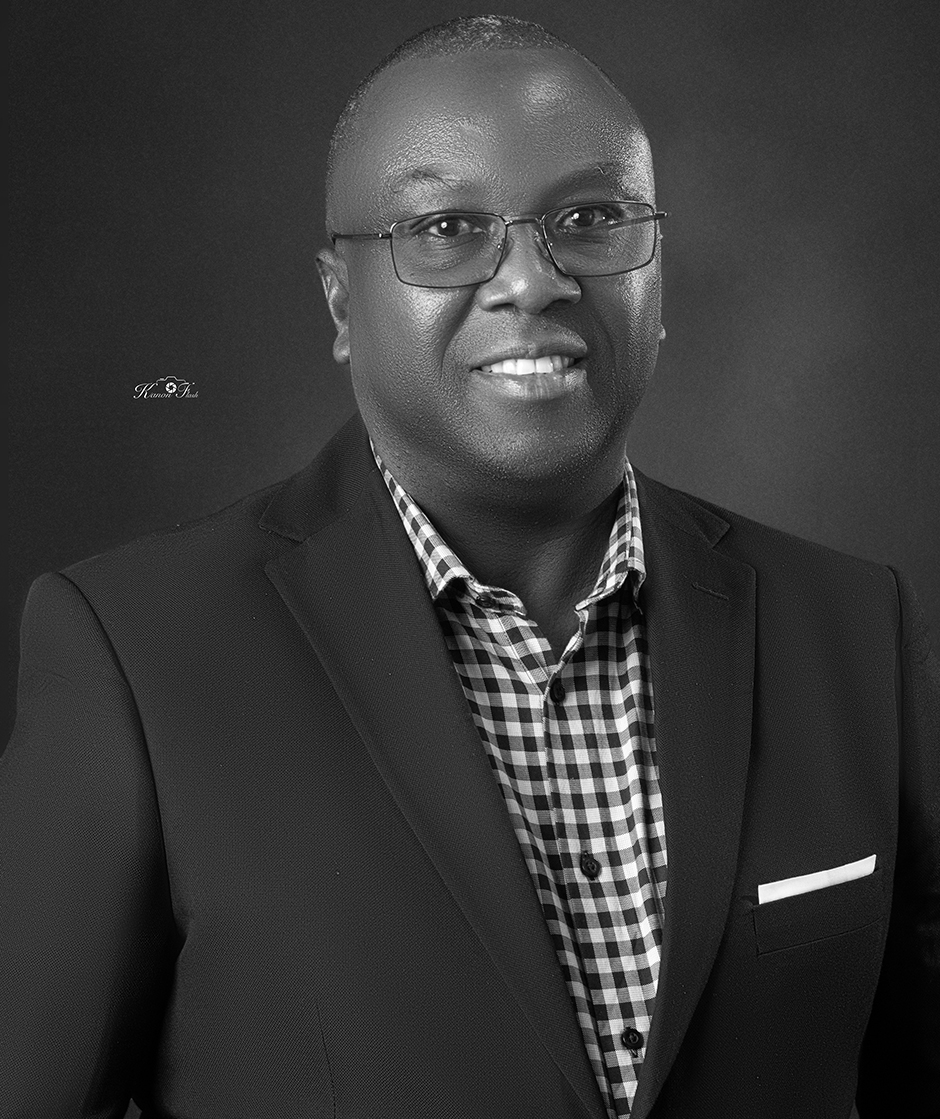
Marvin Garbeh Davis, Sr. is a Liberian writer and poet whose fiction and poetry examine the intersection of memory, labor, faith, and the human condition. His work draws richly from plantation histories, river communities, and Liberia’s shifting landscapes. He lives with his wife Angea in Monrovia, Liberia.
