
My parents’ home was never mine. They bought the three-acre plot of farmland with the eighty-year-old Queen Anne farmhouse when I was almost sixteen. When they tore out the rotting chicken coop that summer and unearthed a tattered white dress, my mom concocted a story that it belonged to the original owners’ daughter. Perhaps they buried it under the chicken shit when she disgraced the family in a way that rendered a white dress unnecessary. And maybe her spirit lived in the charred rafters of the attic that opened into my bedroom.
My paternal grandmother grew up three blocks away. The first time she saw a fire truck, it was extinguishing a fire at the house my parents would buy in 1988.
The house my maternal grandparents would eventually buy across the road from my parents’ home wouldn’t be built until the 1950s. A clan that couldn’t bear to be even a mile apart. I lived three hours away, a deserter.
But when my maternal granny was in hospice care in her home, I returned with no plan to go home until I saw her off to the grave. No matter how foreign the house felt, or how displaced I was.
To my nose, the old farmhouse held both the smells of my childhood and of aging, that combination of mothballs and menthol that I doubt anyone else noticed. I never knew my mom to use mothballs, but the odor was unmistakable in its warning of impending decay.
Menthol, I understood. It was the scent of muscle knots and splintered joints. The longer I was at their house, with its steep back porch steps and the staircase to my bedroom, the walk through the grass to and from the deathbed across the road, the more I felt every movement below the inner dimple of my right knee, requiring the numbing stink of ointments and creams.
But outside the house, tangles and trellises of flowers engulfed the patio, mingling with the earthy hay, the summer heat, and manure from the horses. Between the house and the pasture, floral overgrowth buried the stepping stones. They led to the cavernous metal garage where my dad sold horse tack and guns surrounded by the rough-hewn leather and sweat-soaked saddle blankets, a comforting haze for the visitors who stopped to see Granny and then wandered over to visit my parents on the slab of concrete outside the garage.
July heat usually topped triple digits, with the air a thick, milky stew. But that July it abated, the temperature lingering in the low 80s, prompting distant relatives from out of town to come say goodbye. Such a pretty day for a drive. Let’s go say goodbye. It didn’t occur to anyone to wheel Granny Viv’s hospital bed to the deck of the house to enjoy the weather that was making her blackberries a bumper crop. And she never would have asked, already mortified at putting anyone out, being so much trouble.
She knew her time was ending. Just days, but she didn’t feel the strum of pain or the numbness of morphine. She just felt tired. And worried—the feeling that dictated her life. Confident she’d meet her savior, she didn’t worry about death. She worried instead about if the blackberries had been picked yesterday. She worried about where Grandpa Charlie would go if he couldn’t stay in the house without her. She worried about whether all her guests on the deck needed iced tea refills, or cold cans of pop.
She felt the joy of holding her six-month-old great-grandson, the supple skin of each baby toe in her dry-leaf fingers. These little piggies.
She worried that he and his brother would be teased for having two moms, but that’s the way of the world.
She worried the family would splinter and split; she told me to stick by my cousins, knowing that she was the binding agent among these disparaged people. Her two children spoke to each other only when necessary, their animosity disguised for her benefit, but she knew how they were, fighting over petty jealousies their whole lives. As for my two cousins, I was close to one. The other rarely spoke to me. But that’s just the way of the men. Even the young ones.
As my first week in my parents’ house wound down, my father also didn’t have many words for me, other than terse ones regarding the lateness of my sleeping, my messiness when I left anything in the living room, and the incorrectness of pretty much everything I said. He, my mom, and I went for a ride one afternoon, taking in the long stretches of prairie where my grandfather was born and raised. Only the church remained. A few days before, Dad and I had flipped through a history book about the county, and he gladly pointed out the places where our family once belonged. But in the days that followed, he’d grown tired of my company and wanted none of my commentary or questions.
Back in town I asked for a stop at the Mexican ice cream shop for a mangonada. The frosty plastic cup brimmed with layers of bright, lime-soured mango and streaks of red chili and the chamoy sauce that dripped down the inside. He looked at me as I sucked and gnawed on the tamarind straw, and I knew he thought I was showing off, being intentionally weird just to embarrass him. I decided to pack and leave that night, knowing what was coming if I didn’t.
During a family trip to Colorado when I was twenty-three, my father drove up a mountain while screaming all my faults to me. I was too lazy and too ambitious to have time for anything but work. Slutty and snobbish, too damn smart for my own good, and so incredibly stupid.
At first, I wailed and screamed at his accusations, trying to argue, confused at how the path kept changing. It took hours for me to realize there was nothing to argue. He was contradicting himself, so at least half of what he accused me of being had to be wrong. While I couldn’t calm the hiccupping sobs, I was able to engage my voice and reply, “You’re right. You’re absolutely right,” to each couplet that frothed from his mouth with the acrid coffee breath and yellow, gapped teeth where the spittle flew out.
“You’re right. You’re absolutely right,” I said after every declaration of my shittiness until I fell prone across the backseat, exhausted, unblinking, floating above the roof of their Ford Bronco and the fray within, one of the clouds that once drifted overhead, then became a skirt of fog below us as we gained altitude, unbothered when we drove through it even though common sense would say the Bronco should erupt each cloud into a storm.
At the top of the mountain, I remained prone in the backseat. Of my nine relatives in our mountain caravan, only Granny came to me. A bottle of cool water, a red apple, a cold washcloth she’d dunked in the melted ice in the cooler to rest over my swollen eyes, and the admission no one else in the family dared make: that she loved me.
That night, as I laid on the couch, tears leaking from my eyes when they were available, she repeated her action: a water, an apple, a cloth, an “I love you” while the clatter of dominoes and laughter peeled from the dining room.
Who would bring my child apples and water, compresses and love, if I ripped out her soul like I had come so close to doing when I defaulted to the anger I inherited from my father? Granny was the only person capable of feeling and showing that level of forgiveness for someone’s unbearable humanity. I tried to exhibit my version of maternal love, but we were sleepwalking through our new grief, waking just long enough to get a glimpse of the pleasure of being alive before remembering our reality. We ate tacos in a hotel bed. That was all I knew to do. No coolness, no hydration. Just fiery, toothsome meat dripping red chili sauce.

I didn’t leave that night, as the hospice nurse told us the end was near. For the first time, Granny Viv had spent the day fully encased in a blanket of morphine, her words a jumble, making sense only when she told my cousin’s girlfriend to go get the fried chicken, put it on the table, and call everyone to dinner. There was no fried chicken. She’d fried her last chicken two days before she had the appointment with the cancer diagnosis. But it was important for the newest adult woman in the family to know how to serve the chicken properly.
Once the daily visitors realized there wasn’t much left of Granny, they cleared out and, with no one waiting for a turn with her, I sat by her side as she mumbled at me. Unable to understand anything she said, I held her bloated hand with her familiar crooked arthritic fingers, my brain scrambling for something to say. Words of comfort, of love, anything, but it all seemed trite and futile. The idea of just telling her how much I loved her didn’t even cross my mind.
Instead, I pulled my phone from my pocket and googled “Bible verses for the dying.” I had no clue where to begin when it came to Christian territory, and she knew that, but in these late moments I opted to fake it.
“Jesus said to her, ‘I am the resurrection and the life. Whoever believes in me, though he die, yet shall he live, and everyone who lives and believes in me shall never die. Do you believe this?’”
I did not believe this. I didn’t believe anything. I hoped that maybe there was something else, something other than the follies on this ball of dirt and fire.
She believed it, had told me to make sure I believed it so she could see me again. I could pretend and hope.
She moaned.
“He will wipe away every tear from their eyes, and death shall be no more, neither shall there be mourning, nor crying, nor pain anymore, for the former things have passed away.”
Her eyes pleaded, probably in pain’s delirium. Or because she knew I wasn’t reading with conviction.
Granny Viv was the third dead person I ever saw, and the first who wasn’t neatly tucked into a casket with a faceful of makeup over the bulge of taut, embalmed skin. She’d been gone less than five minutes when I arrived, an hour after I had returned to my parents’ house. I ran through the ruts of their yard and the street after getting the call that she was on her way. If I hadn’t taken the time to change out of my pajamas, I would have been there when she stretched her arm to the ceiling, locked eyes with Grandpa Charlie, and died.
When I arrived, my father met me in the driveway, shaking his head. All that was left to do was make the coffee and wait for the undertaker.
Even Grandpa eventually left her side, sat in his chair, took out his calendar and wrote “Viv” in the square for July 25. Her calico cat dozed at her feet, where stagnant blood was beginning to pool under her fragile skin, hidden by a faded Little Mermaid sheet. Her eyes closed, but her jaw slacked open, its hinge succumbing to gravity.
She’d been healthy for a 92-year-old until the fast-growing tumor came. Four months prior, she’d been so healthy she’d gotten a new hip. Thousands of dollars of titanium soon to be buried in the ground, barely used.
How to grieve someone who makes it to 92, mostly healthy, whose fatal suffering was limited to a single day that required morphine? That year the average American lifespan rose to 78. 7 years. At 92.45 years, we had a bonus of 13.75 years with her, every day a miracle. My grief was selfish, a wallow, because I’d never eat myself sick on her party mix at Christmas again, or reap her praise when I replicated her chicken and dumplings recipe. I loved her. I would miss her. Couldn’t imagine the world without her. But we had almost fourteen years of pure, beautiful luck. How could I grieve when so many people aren’t afforded such a bounty?
Instead of grieving, I played with my cousin’s babies so she could grieve. Talked to Grandpa, turned the blackberries into cobblers, bought succulents at the farmer’s market for my mother. I knew the time of day based on when reruns of Friends were on, flirted with the idea of sleep, made my choices from Granny’s costume jewelry.
Not that this state of anti-grief did me or anyone any good when I returned home. I was present—going through the motions at work, preparing CJ for the new school year—but feeling like a foreigner in my own body. Like my blood had gone stagnant, too.

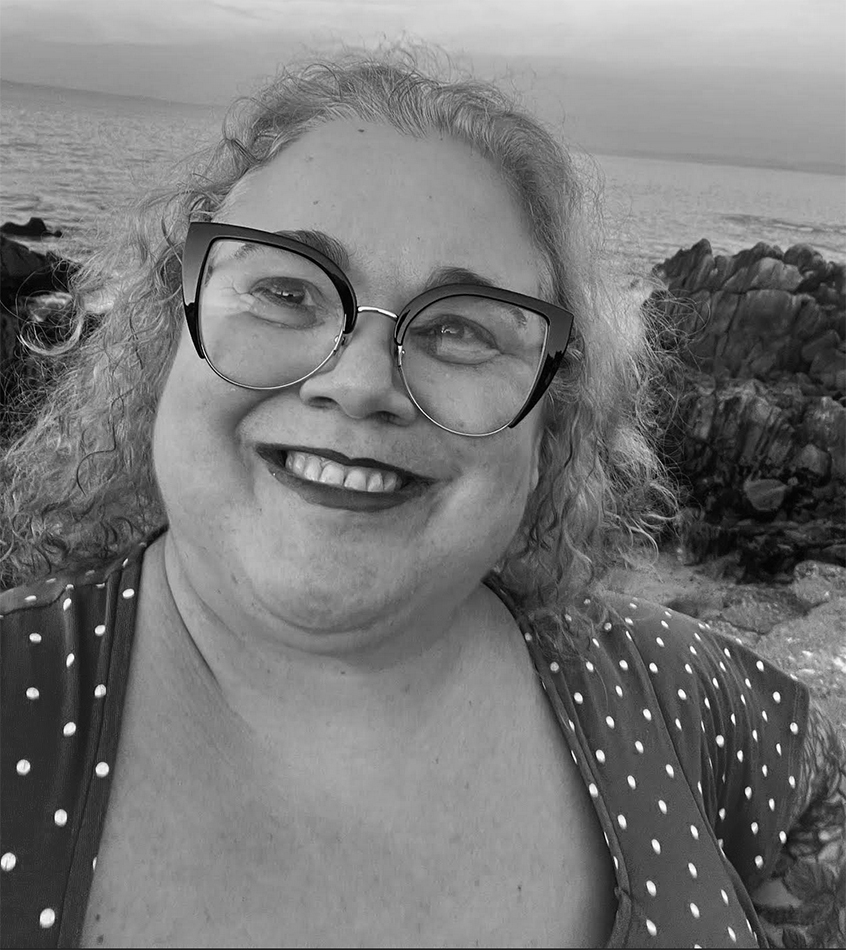
Robin Wheeler is a veteran writer based in the St. Louis area. Her writing has been published by Woody Guthrie Poets, To-Go Zine, Another Jane Pratt Thing, and a variety of anthologies, alt weekly papers, and websites. Her upcoming book, Ribbon of Highway, follows her journey as she chases the ghost of folk icon Woody Guthrie. When not writing, she’s often on the road. Robin documents her travels at 6daysontheroad.substack.com.