
DECEMBER 2025, FLASH, 900 WORDS
“How do we tell her?” Glee asked as we stood on the side of the interstate, pavement torn into tattered hunks, trees sprouting from exposed dirt. Guardrails had rusted to complete copper, stretches of metal crumbling to pavement, lying like dying snakes beneath the sun’s glare.
“I’m not sure it’s our place,” I told my daughter. “The whole death thing must be rough already. She doesn’t need the added stress.”
The Wandering Woman of 95 paced in slow circles across the four-lane highway, translucent dress billowing about her, long hair a mess of twigs and leaves, also translucent, also dead. She walked with her face toward the sky, following the flight of a hawk, lips pursed, a quiet tune whistled to no one in particular.
My grandfather had told me about the Wandering Woman of 95. The accident happened late at night, when all such accidents must happen. She was driving with her boyfriend, who was drunk, and dumb, and rarely thought of anyone but himself. There was a deer, a sharp turn, a lack of seatbelts, and then the scene before us, the lone twenty-something woman forever haunting the highway, forever a cautionary tale, warning travelers of the danger of drunk driving and bad boyfriends.
But there were no longer cars.
With the population what it was, with the famines and plagues and pollutants and sterility, boyfriends were also quite scarce, a problem Glee bemoaned as we foraged for blackberries along the overgrown dividing strip.
“But she could find a different purpose. If I had all eternity to impart wisdom, I wouldn’t want it to be useless wisdom,” Glee said, stepping out onto the pavement, letting herself be seen.
The Wandering Woman’s song halted, head tilting at an odd angle. There was a smile on her face, a sudden flutter of feet, then she was there, right in front of Glee, nose to nose, the green of the forest coloring her translucent silhouette.
“The cars and the boys, the boys and the cars!” she wailed, mouth stretching wider and wider. “They will be your ruin, your death, your…”
Before the ghost could finish, Glee raised a hand to the dead woman’s mouth, pressing palm flat into nose and lips, skin passing through not-skin.
“I really appreciate the advice,” Glee said. “I do. I promise. It’s just…that was the past. When was the last time you saw a car drive by? Or a truck? Or a moped? Or a boy?”
I was surprised by the moped reference.
I barely comprehended what a moped was.
The Wandering Woman startled, stepping back, my daughter’s hand drifting out of her face.
She pointed a finger at me, hand shivering as if she were freezing, eyes seeming to swell in her not-skull.
“That’s my father. Not a boy. Different genus, same species,” Glee said.
“Then…then…” the ghost stuttered.
“I’m really sorry to be the bearer of this, but I didn’t want to see you reduced to a joke. Everyone deserves meaning in their existence,” Glee said.
“But that’s what I do! The warnings are all I have,” the Wandering Woman replied, voice dropping into an even register, high wail receding.
“Oh, there’s still plenty to warn about, like the purity cult back that way,” Glee said, pointing down the highway towards an old exit ramp, “or you could mention the freshwater spring just through the woods over there, or the lowbush blueberries that grow a little further in. A warning doesn’t always have to be for something terrible. You could give helpful tips.”
“The purity cult is a bad thing though, just to clarify,” I interjected.
“I think she got that, dad,” Glee said.
The ghost nodded, eyes narrowed at me.
“Sorry, my apologies,” I replied.
“It’s not the purity I have a problem with. It’s the boys themselves. Just because I’m dead, doesn’t mean I’m stupid,” the Wandering Woman said, “but there’s really blueberries over there?”
Her quivering finger rose, pointing between fir and spruce trees swallowing the interstate’s edge.
“Yup, maybe a thousand feet that way. When you hit the poison ivy thicket, you’ve gone too far,” Glee said.
“Too far,” the ghost repeated.
“See, isn’t that better. You’ll save people from starvation, from thirst, from self-flagellation and those awful robes.”
“No robes. No flagellation. No purity,” the woman said, nodding.
“Just the water. The water is pure,” I added.
“Dad…”
“Sorry, sorry. It’s just the importance of a clear message. Don’t want to be leading anyone astray.”
“I’m not the kind of ghost to lead someone astray,” the Wandering Woman said, turning her back to us and walking in the direction of the blueberries and the spring. She was checking her sources, verifying data. She would be a great guide for the lost, a savior to many, or a few, given our recent census numbers. But a few were better than none. And who didn’t like purpose in their afterlife?
“Got to save the best for us though,” Glee said as we moved to the dividing strip, hunching down to pluck swollen blackberries off their thorny vines. “Can’t give away all the secrets.”
“Smart girl,” I replied, popping a blackberry in my mouth.
“We don’t need any more ghosts haunting the interstate,” she said, “There’s only so much good advice left in the world.”

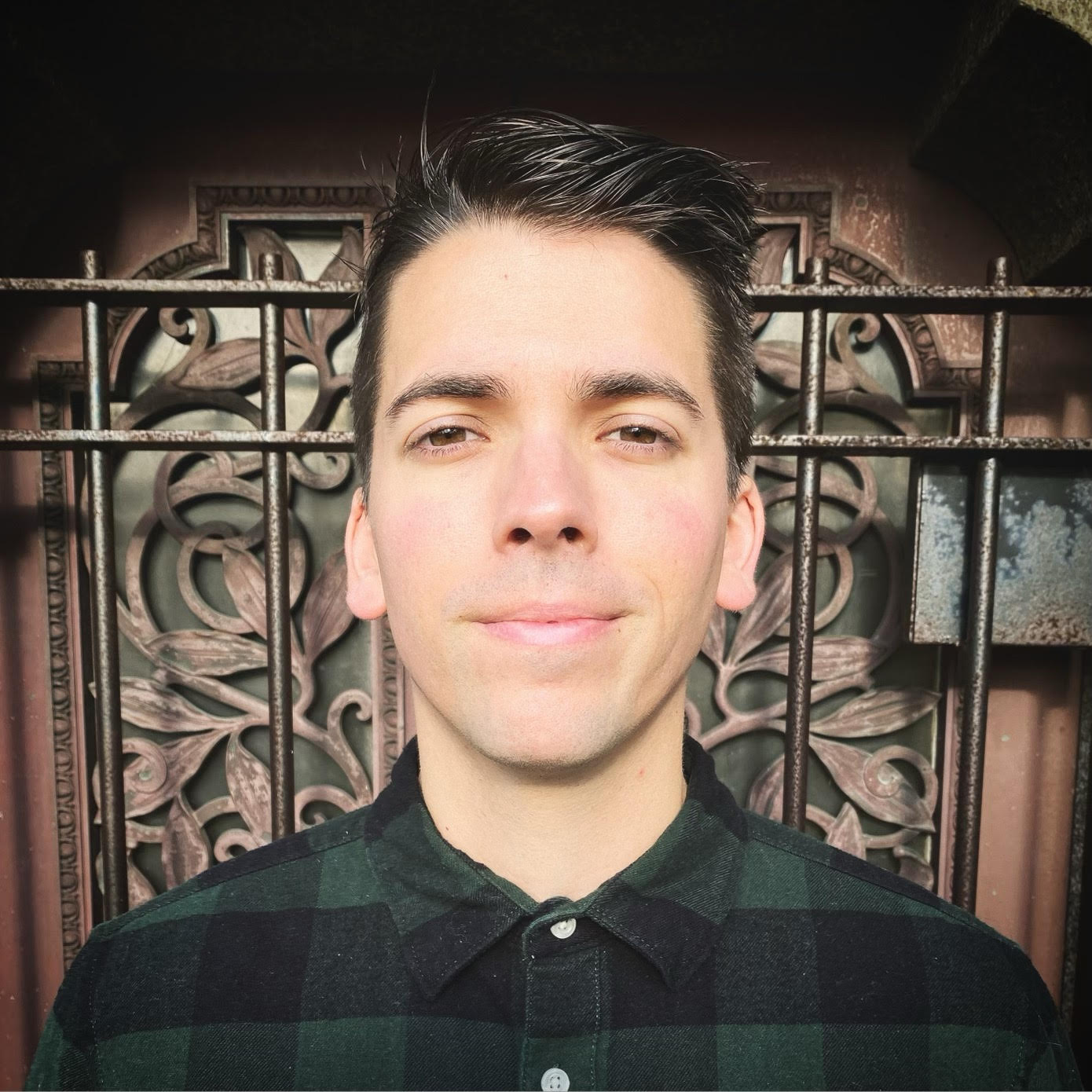
Corey Farrenkopf lives on Cape Cod and works as a librarian. His writing has been published in Strange Horizons, Electric Literature, The Deadlands, Nightmare, Flash Fiction Online, Bourbon Penn, and elsewhere. He is the author of the novel, Living in Cemeteries, and the short story collection, Haunted Ecologies. To learn more, follow him on BlueSky @CoreyFarrenkopf or on the web at CoreyFarrenkopf.com.
Behind the Scenes with Corey Farrenkopf
What was the initial inspiration for this story, and were there significant changes from that inspiration through edits and revisions?
The initial inspiration for this one came from a panel at StokerCon (the annual Horror Writers Association conference) two years ago. I can’t remember exactly what the panel’s topic was, but someone on the panel was talking about how folklore shifts from one region to another, but there are so many similarities between beliefs, even when they’re spread far apart…which made me think about the myth of women haunting highways and how basically every part of the US has their own version of this sad story. I have a friend who is from central Massachusetts and three roads over from their childhood home was one of these roads haunted by “a woman in white.” I’ve heard people talk about similar stories out here on Cape Cod.
Recently, I’ve really been enjoying taking these types of folkloric beliefs/genre tropes and seeing what happens to them when I stick them in a distant future. How does it change things? How do things remain the same? This story asks, what happens to the ghost haunting highways when there are no longer functioning highways to haunt?
And this was one of those rare unicorn stories where the first draft wasn’t far off from the final version. A few line edits here and there, but the majority of this one came out pretty perfect from the start…which is rare for me. If only my other stories could arrive in such a fashion 🙂
How does this story fit into your body of work—is it similar in ways to what you usually write or is it very different?
Right now I seem to be working on two types of short stories (for the most part). The first are ones that will fit into a horror/dark fantasy collection all about friendship and/or basements (It’s going to be called What Friends Don’t Tell Friends About Basements, which is the name of a story I had in Bourbon Penn a few years back), The second being ones that will fit in a (mostly) far future sci-fi horror collection…which is where this one lands. Most of those stories, as I mentioned above, take a usual horror trope and throw it way way out into the future. I’ve got a weird one about futuristic zombies in an upcoming issue of Fusion Fragment. I’ve got another about cultish religions I’m trying to find a home for. My story, “Drown-Haunted”, over in Flash Fiction Online, looks at haunted houses in a drowned world. Now I just need to see what happens to werewolves in the post apocalypse and I’ll have tackled all my favorite tropes.
I just have a lot of fun with this idea. They’re really a joy to write.
Much of my work falls into the eco-horror category, and this one has bits of that in there too. I live on Cape Cod, which is surrounded by the sea, so climate change and shifting/creeping environments are always on my mind. What we’re losing mainly. Blueberry conservation is very important in the future! Something we all need to remember 🙂